A Rainy Afternoon Rewatch: Follow One Object Through the Film
Track a recurring film object on a focused rewatch to see how its use, condition, and context change without treating every appearance as a clue.
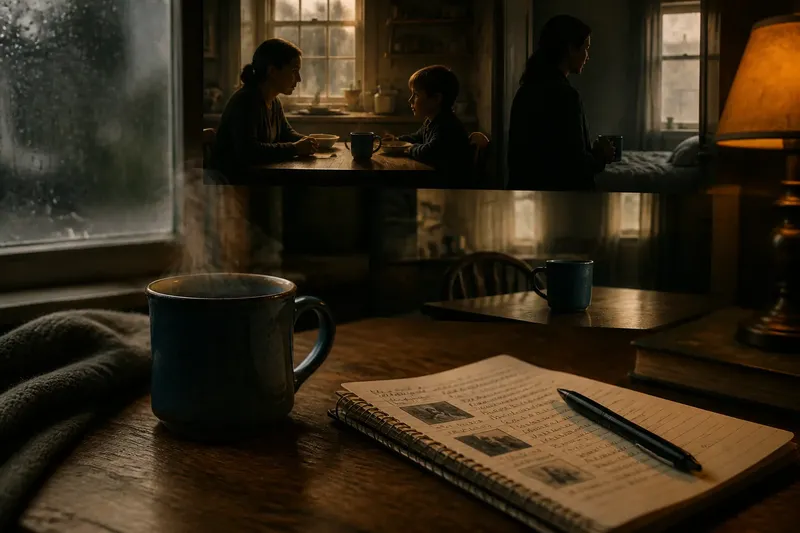
A recurring film object can change meaning without changing shape. On a rainy-afternoon rewatch, choose one visible prop—a mug, coat, key, or photograph—and follow what characters do with it, where it appears, and what the scene asks you to notice. The point is not to uncover a secret in every frame; it is to see how production design helps a story make meaning through ordinary things.
How do you choose an object to track?
Choose something that appears more than once and can be identified without interrupting the film. A red scarf passed between characters, a chipped cup on a kitchen counter, or a paper envelope carried from room to room can all work. Avoid starting with an object you already believe is a clue; that expectation can make every appearance seem more deliberate than the film supports.
Look for a visible change in use or context rather than sheer prominence. An object might be handled differently, left behind, moved to a new setting, or shown while a character makes a decision. If you cannot remember where it first appeared, pick a simpler object and begin again at the next clear appearance.
Keep the choice modest: a familiar household item often reveals more about changing relationships than an elaborate symbol.
What should you record on the first pass?
Watch the film once without pausing to build a basic record. For each appearance, note the scene or broad story moment, the object’s location, who handles it, and what they do with it. Add a brief description of its condition, such as folded, wet, clean, or visibly worn, only when that detail is clear on screen.
Separate observation from interpretation. “Mara puts the envelope in a drawer” is an observation; “Mara is hiding evidence” is an interpretation that needs support from the scene. A short two-column note can preserve that distinction:
- What is visible: the action, setting, handler, and any noticeable change.
- What it may suggest: a tentative reading tied to what the scene shows.
Record absence carefully, too. If the object is not visible in a scene where you expected it, that may reflect framing, blocking, or simple continuity; by itself, absence does not prove a story point.
How can the same object take on a different meaning?
Meaning often shifts because the object’s practical use changes. A coat might begin as protection from the rain, become something offered to another person, and later hang unused in a room. Those actions can suggest care, distance, or loss, but the surrounding performance and plot determine which reading fits best.
Pay attention to who controls the object. A character who gives something away has a different relationship to it from someone who takes it without asking. Notice whether another character accepts, refuses, returns, or ignores it; those responses can reveal more than the prop alone.
Imagine a fictional drama in which a blue mug first sits beside a parent during breakfast, later gets carried to a child’s empty bedroom, and finally remains untouched at the table. The concrete progression is from shared routine, to an attempt at connection, to a routine interrupted; a viewer might read grief or estrangement, depending on what the story establishes. The mug need not be a secret clue for its changing use to matter.
How do framing and handling change what you notice?
Production design gives an object its material and visual character, but the shot determines how much attention it receives. A mug in the background may establish a lived-in kitchen; the same mug held in a close shot can invite a closer look at a crack, a gesture, or a character’s hesitation. That shift in emphasis matters, but it does not automatically mean the object has symbolic importance.
On the rewatch, notice whether the object is centered, obscured, touched, or simply part of the setting. A character turning a ring around a finger may make it emotionally present even when the camera stays on the character’s face. Conversely, a brightly colored item can stand out because it helps organize the frame, not because the plot will return to it.
Ask what the scene would lose if the object were removed. If the action or relationship becomes harder to understand, it may be doing practical storytelling work. If little changes, it may be texture, continuity, or set dressing rather than a meaningful motif.
How do you tell a recurring motif from a hidden clue?
A motif is a recurring element whose repeated appearances gather meaning or create a pattern. A clue is a detail that helps the audience infer specific information about the plot. The same object can serve both roles, but repetition alone does not establish either one.
Check whether the film gives the object consistent emphasis and whether its appearances connect to a character, choice, or theme. Then compare that pattern with what the story actually confirms. If an interpretation depends on ignoring more direct explanations or on imagining details the film never shows, keep it as a possibility rather than a conclusion.
It is also reasonable for an object to have several functions at once: a suitcase can be practical luggage, a reminder of departure, and a recurring visual element. Calling every return a clue can shrink the film’s range by treating atmosphere and character behavior as a puzzle with one answer.
What questions help you read a recurring film object?
Does an object have to appear in close-up to matter?
No. A background object can acquire meaning through its changing place in a room or its repeated association with a character. Give more weight to a pattern the film makes clear than to a detail you had to search for in a paused frame.
What if I cannot remember every appearance?
Track the most noticeable appearances and leave gaps rather than guessing. A rewatch can reveal additional moments, but an incomplete record is more useful than a confident claim about scenes you do not recall.
Should I pause the film to inspect the prop?
Pause only when a detail is hard to identify or you want to check a note. Constant stopping can break the timing of a scene, which may be part of how the object gains meaning through gesture and reaction.
What if the object never changes?
Its steady appearance may itself provide contrast with changing characters or surroundings, or it may simply remain a practical part of the setting. If the film does not draw attention to it, there is no need to assign it a larger role.
How should you finish the rewatch?
Compare your notes and write one sentence describing the clearest change: for example, “The keys move from being used to enter the apartment to being left on the table.” Then write a separate sentence about what that change may suggest, naming the scene or behavior that supports your reading. This small separation keeps the observation solid while leaving interpretation open.
For your next rainy-afternoon rewatch, choose a recurring film object that is easy to recognize and track its use before deciding what it symbolizes. The most useful result may be a clearer sense of how the film’s rooms, gestures, and relationships work together—not a hidden answer waiting inside the prop.