Straight Cuts or Long Takes: Two Ways to Hold a Conversation
Straight cuts or long takes shape how viewers follow a conversation. Choose the approach that directs attention to speech, reactions, or shared tension.
Straight cuts or long takes shape what viewers notice in a conversation and when they notice it. A cut can isolate a listener’s reaction; an uninterrupted shot can keep that response connected to the speaker’s behavior. Choose based on what the scene needs the audience to see.
What does each approach make the viewer watch?
A straight-cut conversation moves between shots, often from one speaker to another. The editor can hold on a face after its character stops speaking, cut to the person receiving a difficult line, or return to a two-shot that shows the pair together. Each cut selects a piece of the exchange for attention.
A long take keeps the scene running without an editorial cut. The camera may stay still, track between characters, or reframe as they move. Viewers can read a speaker’s expression and the listener’s response in the same stretch of screen time, though framing still influences where the eye goes.
Neither approach is automatically more intimate or realistic. A close-up can isolate a person within a long take, and a cut can preserve a room’s geography if it returns to a consistent two-shot. The useful distinction is how explicitly the scene assigns attention.
When do straight cuts fit the scene?
Choose cuts when dialogue contains separate turns, changing tactics, or distinct reactions that need to register clearly. If one character asks a question and the other’s answer reveals a shift in attitude, a cut to the listener can give that change its own beat. Cutting also helps when several speakers need to be distinguished.
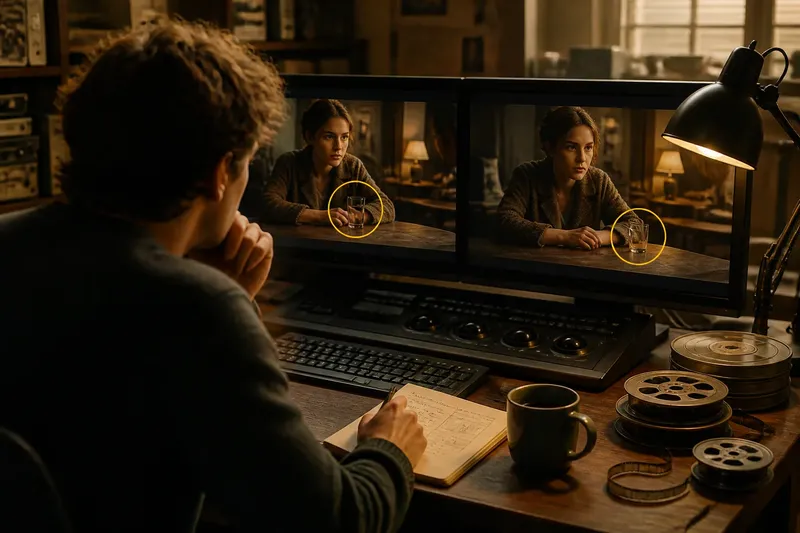
A cut can give a visual detail its own moment: a hesitant hand, a glance toward the exit, or a face going still after a familiar name. A close-up or insert can make the detail legible without asking viewers to search the frame. The shot should add information or redirect attention, not merely echo the line.
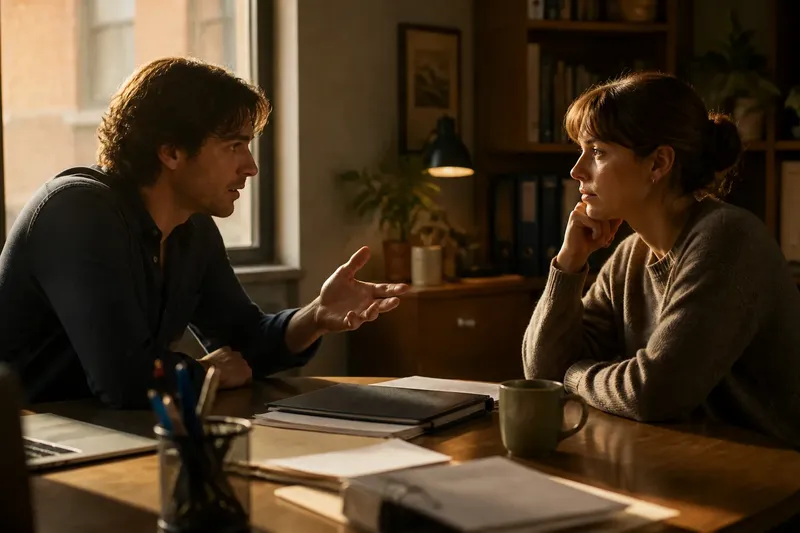
Say you are editing an invented scene between two coworkers at a desk. One says a missing file was sent yesterday; the other pauses and looks toward a closed folder. If the folder is the clue, cut to it, then back to the first coworker’s face; the expected result is that viewers can identify the clue and see whether it was noticed.
Cutting can also sharpen an exchange built on interruption. Shorter shots may make a dispute feel brisk, while a held reaction after a cutting remark leaves space for discomfort. Rhythm comes from shot duration and placement, not from a rule that every line needs its own angle.
Use cuts when important information arrives in distinct visual beats.
When does an uninterrupted take fit better?
Choose a long take when tension comes from watching a response develop rather than receiving selected reactions. A character may try to stay polite, reconsider a sentence, then answer with a small change in tone. Keeping speaker and listener visible can let those actions overlap instead of separating them into editorial units.
A continuous take also suits scenes where the relationship between people in the room matters as much as the words. A camera that keeps both figures in a two-shot can show who leans in, who withdraws, and whether they share the same sense of the moment. If one character crosses the room while talking, a measured camera move can preserve that changing distance.
Imagine an invented scene in which a parent and adult child clear dishes after a strained visit. The parent asks whether the child will stay for coffee, then reaches for another plate before hearing the answer. A long take could hold both people and the empty place between them; viewers would be able to watch the question’s effect through their pauses and movements.
Long takes still use emphasis. A push toward one face can make a listener’s silence the center of attention; a wider frame can let both responses compete. If the camera drifts without a clear reason, movement may distract from the exchange. Plan the take’s visual focus, even when the movement is restrained.
Use an uninterrupted take when the scene’s force lies in reactions unfolding together.
How should you choose between straight cuts and long takes?
Start with the audience’s task. Ask what viewers must notice, when they need to notice it, and whether that information is clearest in a selected shot or a shared view. Match the coverage and edit to that answer.
- Several speakers need clear turns: If a group shot makes it hard to tell who holds the floor, use straight cuts between speakers; if their relationships matter more than turn-taking, retain a group view.
- A reaction matters more than the line: If the listener’s response is easy to miss, cut to that face and hold; if the response depends on seeing both people, keep them together in the frame.
- Behavior overlaps: If simultaneous gestures or speech carry the moment, favor a long take or sustained two-shot; if one action needs to stand out, use a selected cut.
- A visual clue must be unmistakable: If viewers need to identify a particular object or expression, cut to it and then show the other character’s response; if the clue is already clear in the wider frame, stay there.
- Movement changes the power balance: If a character’s changing position makes the shift readable, consider a long take that follows it; if the movement is subtle, cut to a clearer angle or reframe the pair.
- The exchange has a deliberate pause: If one person’s reaction is the point, hold on that face; if the shared silence matters, keep both people visible.
These are starting choices, not fixed rules. A scene may begin with a long take, then cut when a character changes the subject, or use mostly cuts and reserve a sustained two-shot for uneasy agreement. A change in technique has more force when it marks a change in the scene’s attention.
What questions help you choose an approach?
Should every spoken line get a cut?
No. Cutting on every line can make an exchange feel mechanically divided, especially when the listener’s response is the important event. Keep the current shot when it contains the most useful information, and cut when another angle changes what viewers can see or understand.
Can a long take still emphasize one character?
Yes. Framing, camera movement, focus, and blocking can shift emphasis without a cut. A gradual move closer to one speaker draws attention, while keeping the listener in frame preserves the relationship between them.
What if a conversation feels flat in a two-shot?
First consider whether blocking gives the characters distinct actions and positions. If similar behavior hides important reactions at that distance, closer coverage and selected cuts may clarify the exchange without adding cuts for their own sake.
Can a scene combine both approaches?
Yes. A continuous opening can establish how the characters share a space, followed by cuts when a reveal makes one person’s reaction newly important. A return to a wider view can reconnect the pair and show how the reveal changed their behavior.
What should coverage make possible?
Coverage is the set of shots recorded to give the editor options for shaping a scene. For a conversation, it might include a two-shot, individual angles, and selected close-ups. More coverage does not automatically improve the scene; each angle should serve a specific shift in attention.
If the intention is a long take, plan camera position, focus changes, and actor movement so essential reactions remain visible. If the intention is cutting, preserve clear screen direction and record the moments needed to move between speakers and listeners. The production plan should support the intended viewing experience, not simply collect every possible angle.
Consider an invented scene in which a tenant tells a building manager that a hallway door was left open. The manager dismisses the concern, then recognizes a key on the table that should not be there. If viewers must notice the key before the manager does, an insert followed by a held reaction can direct that discovery; if the scene is about the manager hiding discomfort, a two-shot can keep the tenant’s attention visible.
Before choosing, describe the scene’s attention pattern in plain language: “We should notice the listener losing confidence,” or “We should see both people avoid the question.” That sentence can guide framing, blocking, and the edit. Straight cuts or long takes work best when the choice serves a particular moment in the conversation.