Before the Soundtrack: How Silent Films Made Meaning
Explore silent film sound and accompaniment: learn how live music shaped mood and rhythm while images and intertitles made the story legible.
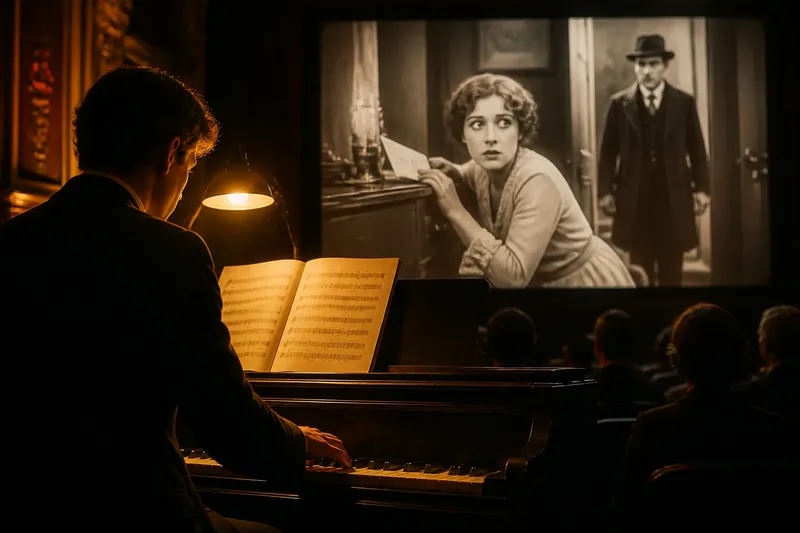
At a silent-film screening, a pianist might turn a tense pursuit into a comic one—or make a quiet farewell feel mournful—without changing a single frame. Silent film sound was not necessarily absent: many screenings included live musical accompaniment, though the form and availability of that accompaniment varied. The images and intertitles still had to make the essential action understandable.
Music could color a scene, reinforce its pace, or create contrast with what appeared onscreen. It did not carry one fixed meaning by itself: the same melody might feel tender in one context and ironic in another. To understand the craft, it helps to consider how accompaniment interacted with the film rather than treating it as a universal soundtrack.
How did musical accompaniment shape a screening?
Depending on the venue and production, accompaniment could come from a pianist, an ensemble, or a larger orchestra. Some screenings used music selected or arranged for a particular film; others relied on performers choosing material as the film played. Practices differed across places, periods, and theaters.
Music gave the moving images an audible rhythm. A lively passage could support quick movement, while sustained notes could let a reaction or pause linger. These choices guided attention, but viewers could still understand the basic sequence of events through what the film showed.
Listen for the way the music responds to movement, changes in mood, or a shift of location. Then check whether the image supports that musical cue or complicates it.
What could music add without explaining the plot?
Accompaniment could suggest emotional shading without identifying a character’s exact motive. A minor-sounding passage might lend sadness to a departure, for instance, but the performer’s actions and the surrounding images determine who is leaving and why. The music’s effect depends on context, and a different performance could shape the same scene differently.
Music could also create contrast. A jaunty tune beneath an awkward mishap might encourage a comic reading, while a grave passage could make the same movement feel more consequential. Neither interpretation is automatic; acting, editing, intertitles, and the audience’s expectations all contribute.
Separate what the image tells you from what the accompaniment suggests. That distinction makes the soundtrack’s contribution easier to hear.
How did images and music work together?
The screen established who was present, what they did, and how one action followed another. Accompaniment could intensify suspense during a pursuit or soften the pace of a reunion, but it might not specify which character had taken a letter or why someone stopped at a doorway. Those details generally depended on the visible action and any intertitles.
Imagine an invented screening in which a character hides a letter as a visitor enters. The pianist chooses a playful, brisk tune, making the concealment feel like a comic near-miss; the film’s framing still shows who hid the letter and where it went. A different accompanist might emphasize danger instead, changing the mood without changing those plot facts.
Notice which parts of a scene remain clear if you set the music aside, and which emotional cues the accompaniment adds.
How can you listen closely to silent-film music?
- Notice whether the music follows a character’s movement; if it does, consider how it reinforces pace, and if it does not, listen for contrast or an independent mood.
- Check whether the accompaniment changes when the setting changes; if it does, ask what atmosphere the shift suggests, and if it stays steady, consider whether the film itself marks the transition.
- Listen for a pause or reduction in sound around a reaction; if it draws attention to the face, note that emphasis, and if music continues, compare its mood with the performer’s expression.
- Observe whether a quick musical passage accompanies a rapid sequence of images; if so, consider how rhythm links the action, and if not, notice whether the mismatch creates tension or humor.
- Compare the emotional tone of the music with the visible behavior; if they agree, identify the shared cue, and if they differ, consider whether the contrast invites irony or uncertainty.
- Check whether a musical change signals a new scene or a new character; if the image confirms the shift, note how sound supports orientation, and if not, rely on the action and intertitles before deciding what changed.
What should you look for in a silent-film soundtrack?
Did every silent film have live music?
No single accompaniment practice applied to every film or screening. The form could vary with the venue, available musicians, and local convention, so a modern presentation may not reproduce the sound of every historical screening.
Could music explain what a character was thinking?
Music could suggest an emotional direction, but it did not establish a character’s motive with certainty. Look to behavior, framing, and intertitles for plot information, then consider how the accompaniment colors your interpretation.
Why can the same scene feel different with different music?
Musical tempo, style, and mood can encourage different emotional readings of unchanged images. The effect is contextual, so the performance does not erase the scene’s visible facts but may shift its tone.
What should I watch if the music distracts me?
Track entrances, gestures, objects, and changes between shots. Once the action is clear, listen again for how the accompaniment supports or resists what the images suggest.
For silent film sound, keep two questions in view: what does the screen establish, and what does the accompaniment lead you to feel? That distinction helps you appreciate the music’s expressive work without mistaking its mood for the film’s entire story.