Why a Wide Frame Can Make a Character Feel Alone
A wide frame can make a character feel alone by turning distance, empty space, and screen placement into visible parts of the scene’s emotional pressure.
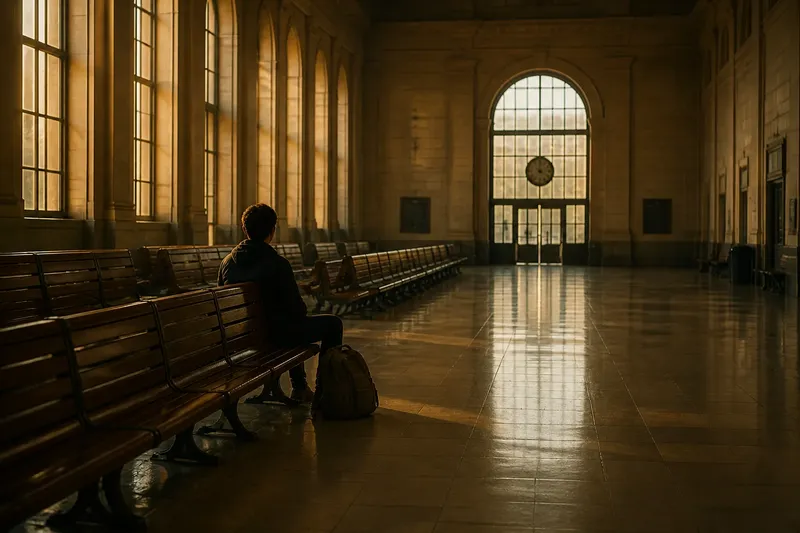
A wide frame can make a character feel alone by giving the surroundings more visual weight than the person. In cinematography, isolation is not simply a small figure against a large background; it comes from how distance, empty space, and placement shape the viewer’s attention.
What does the frame ask us to notice?
A wide composition shows a character in relation to a substantial area around them. That area might be an empty hallway, a broad stretch of shoreline, or a crowded room where no one turns toward the figure. The setting becomes part of the emotional information rather than a neutral backdrop.
Start by deciding what the audience should notice first. A figure may be tiny in the image, but a bright doorway, a long row of windows, or a looming wall can pull the eye elsewhere. That shift can suggest that the character is being overlooked, or that the environment is pressing in on them.
Try making a quick thumbnail before setting the camera. Mark the frame edges, the figure, and the strongest background shapes; if the setting dominates for a reason, the composition is doing more than simply showing scale.
How does distance change the feeling?
Camera distance affects how closely the viewer can read a person. A wide view can make facial expression less legible, so posture and movement carry more of the performance. A held, still figure may seem separated from a place that continues around them.
Distance does not automatically mean loneliness. A wide view can feel welcoming if the character has a clear path, a companion nearby, or a setting that seems to invite exploration. For isolation, consider whether the distance makes contact feel difficult: perhaps the character stands far from an open door, or occupies the only still patch in a moving crowd.
Imagine a scene in which a character waits at one end of a quiet bus terminal while a friend is expected at the other. If the camera holds far enough back to show the long aisle and the unused seats between them, the wait can feel exposed; bringing the camera closer would make the same moment more personal and less defined by separation.
Where should the figure sit in a wide frame?
Placement changes what the surrounding space seems to do. A centered figure can look pinned in place when the architecture is rigid and symmetrical. A figure near the edge may seem to be slipping out of view, especially if the empty area ahead offers no visible destination.
Negative space is the area not occupied by the main subject. It can suggest absence, distance, or possibility, depending on its shape and what it contains. Leave open space on the side where a character looks or moves, and the frame may imply a route; leave it behind them, and the same space can feel like something abandoned.
- Place a figure against a blank wall when you want the surrounding emptiness to read clearly.
- Use a doorway or window as a distant point of connection, then decide whether the character appears able or unable to reach it.
- Keep a companion within the frame but separated by a strong architectural line when the loneliness is social rather than physical.
- Let a large foreground object partly interrupt the figure’s space when the environment should feel obstructive.
Each choice changes the relationship between person and place. Avoid adding empty space merely to make the frame look dramatic; give that space a clear visual or emotional function.
Which background details strengthen isolation?
Repeated shapes can make a person seem out of step with an environment. A row of identical lockers, office cubicles, or apartment windows gives the eye a pattern to follow, while one solitary figure breaks it. The effect is strongest when the pattern remains readable rather than becoming a mass of distracting detail.
Scale also matters. A low ceiling may compress the frame, while a high, bare wall can make the figure seem vulnerable. A distant horizon can open the image without offering comfort; the character may have room to move but no visible sign of belonging.
Control visual competition with wardrobe, color, and lighting. A muted figure against a similarly muted room can blend into the setting, suggesting that the person is unnoticed. A sharply lit figure in a dim space may instead look exposed, as if the environment has singled them out.
How can camera movement support the composition?
A locked camera lets the viewer study the relationship between a figure and the space. If the character crosses a broad room while the frame stays still, the journey itself can emphasize separation. A slow move toward the person may soften that distance, but it can also make the audience feel that the isolation is closing in.
Movement should have a visible reason. A pan that follows someone can preserve their connection to the room; a pan that leaves them behind can make the setting seem indifferent. If the camera moves without a clear change in attention or relationship, it may weaken the stillness that gives the composition its meaning.
For a restrained approach, decide whether the camera stays with the person, leaves them, or holds its ground. Those are distinct emotional choices, even if the frame moves only slightly.
What should you check before choosing a wide frame?
Does the setting have a clear emotional role?
Name the feature that matters: the empty seats, the distant doorway, or the unbroken wall. If no part of the setting changes how the character reads, a closer composition may communicate the moment with less visual noise.
Can the audience find the character quickly?
Check the figure’s contrast, silhouette, and position at the intended viewing size. If the person disappears among background detail, simplify the arrangement or give the figure a clearer edge rather than relying on the audience to search.
What does the empty space imply?
Ask whether it feels reachable, blocked, or simply vacant. The answer should fit the character’s immediate situation, not just the visual design of the shot.
Does the frame change the performance?
At a distance, a small gesture may no longer register, while a turn, pause, or change in posture may remain visible. Rehearse the action within the composition so the actor’s choices can be read without forcing exaggerated movement.
When does a wide frame make loneliness less convincing?
A wide frame may weaken isolation if the space is lively, inviting, or full of visible connections. A character surrounded by people who respond warmly can seem included even when they stand apart. Conversely, an empty room can feel peaceful rather than lonely if the character appears at ease within it.
Match the composition to the scene’s behavior. If the character is trying to withdraw, let the frame hold the distance they create; if someone is attempting to reach them, show the gap and the effort to cross it. The relationship is more persuasive when blocking, setting, and camera position point in the same direction.
For a wide frame that makes a character feel alone, give the distance a purpose, shape the open space around a readable figure, and let the background reveal what kind of separation the scene means. Before adjusting the lens, ask what the viewer should feel is missing: company, shelter, attention, or a way forward.